
The notion of the place of work has officially passed through the four walls of a company office in the year 2026. The classic safety checklist, previously controlled by fire drills and ergonomic chairs, has been transformed radically, with more than half of all employees who could work remotely now working in a hybrid model. The safety in the workplace today, concerns more about the virtual boundaries and mental resilience than it does about the actual security.
Social media has become a two-edged sword as we move into a new era. Although it helps to connect in a decentralized workforce, it also brings new dangers to mental health, privacy of data, and professional behavior. The necessity to be conspicuous on the Internet tends to clash with the necessity of the modern professional to have a focused, safe, and healthy workplace.
Understanding the Digital Frontier: Why Safety is No Longer Physical
A safe environment for the 2026 hybrid worker implies an environment where the cognitive load is adapted to and where there is no digital harassment. Social media and the resulting blurring of personal and professional boundaries have given rise to a novel psychosocial risk group.
Employers have become aware that the safety of an employee is not limited only to their physical presence. The blurring of the boundary between a home office and a creative studio can make employees feel the pressure to create something that reflects their professional identity.
To creatives or marketers, the urge to get more likes on your reels can result in what can be called brain rot or digital fatigue, which is a state of mental fog due to the constant need to seek short-form engagement. This exhaustion not only reduces productivity but also raises the chances of human error in a high-stakes task, which is a safety risk in a hybrid arrangement.
Implementing a People-First Safety Framework for 2026
The People-First safety framework is an adoption that companies are embracing to deal with these emerging challenges. This involves:
- Psychological Safety Protocols: Promoting employees to disclose any instances of digital burnout or online harassment without fear of reprisal.
- Cognitive Load Management: Introducing Deep Work hours during which social media and internal messaging notifications are muted.
- Digital Boundary Training: Training employees on how to differentiate between their personal social and their work digital self.
- AI-Based Mental Health Surveillance: Predictive analytics to detect indicators of burnout-inducing fatigue or disengagement.
Addressing the Social Media Paradox: Connectivity vs. Cognitive Drain
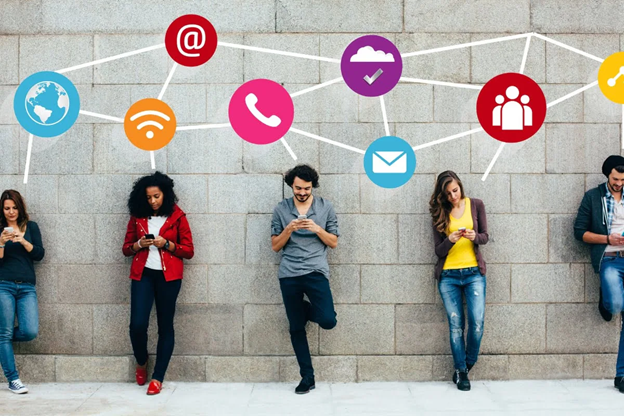
The 2026 hybrid workforce will depend on such platforms as LinkedIn, Instagram, and TikTok to remain topical. Nevertheless, the incentive-driven character of these platforms (based on dopamine-stimulating algorithms) may affect the cognitive safety of an employee.
Research indicates that excessive use of short video material is associated with diminished attention span and controlled inhibition. This is a significant issue in a hybrid world, where productivity is based on self-regulation.
Digital Wellness is the most recent pillar of Health and Safety (EHS) policies that employers are incorporating into their policies. They understand that an employee who is too busy trending is an employee who may fail to notice a very important detail in an agreement or a safety measure in a distant plant.
Security on the Digital Stage

In addition to mental health, social media also reconstructs the concept of safety with regard to Professional Security. One leaked video or a post that is inappropriate can undermine the security of a project of a whole team or the reputation of a company in 2026.
Digital Safety now also covers the protection of employees against doxing or targeted online hate speech that can be based on their professional affiliations. Workers working at home, often recording content on cameras, accidentally capture a glimpse of their personal lives or classified company information that could be seen in the background. The result of this has been the emergence of Virtual Workplace Audits in which safety officers give tips on how to create a stylish yet safe home-recording space.
Read: Why Digital Accessibility Belongs in Your Workplace Safety Programme
Essential Checklist for a Secure Hybrid Digital Presence
- Background Check: Make sure family photos and other confidential documents are out of sight in the frame of your video calls or social posts.
- Notification Hygiene: Turn off unnecessary social notifications during work on the core (usually 10 AM to 3 PM in the majority of companies in 2026).
- Authenticity vs. Performance: Dwelling on valuable work in the profession instead of the desperate pursuit of viral indicators.
- Privacy Settings: Periodically review who has access to your personal location data and contact information.
Establishing the New Safety Mandate for a Resilient Workforce
Going forward into the rest of the year of 2026, it is evident that the workplace is no longer a place, but an experience. Re-defining safety in a hybrid workforce means we need to go beyond the physical into the digital and psychological. The ones that will survive will be the companies that shield their employees against the unseen dangers of the 24/7 digital cycle.
It is understandable to think about drawing more growth indicators or the way to get more likes on your reels, but the key to lasting professional success in the hybrid age is based on balance. When we prioritize digital wellness similarly to physical safety, we will create a workforce that is more than just connected, but resilient, focused, and really safe.
Frequently Asked Questions (FAQ)
Q1: What is the impact of social media on physical safety in a hybrid position?
A1: Indirectly, via Digital Fatigue. Over-scrrolling results in loss of sleep and lack of concentration, which further increases chances of accidents in a home office setting, including, but not limited to, trips, falls, or repetitive strain injuries.
Q2: What is Brain Rot, and why are HR departments discussing it?
A2: It is a colloquial expression of cognitive fatigue and reduced attention span due to excessive use of short-form video material. HRs consider it a mental and productivity risk.
Q3: Is it possible to make Digital Wellness a component of my workers’ compensation?
A3: The new trends show that such a phenomenon as Psychosocial Risks, such as burnout caused by digital overload, is actively being accepted in the health insurance and wellness allowance provided by progressive hybrid companies.
Read: The Future of Digital Twin Technology in Smart Manufacturing