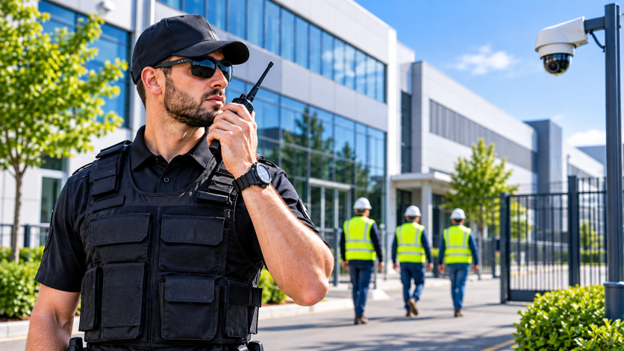
On-site security is an important part of maintaining a safe and productive business environment. Whether a company operates a construction site, warehouse, manufacturing facility, commercial property, or industrial plant, security risks can affect employees, visitors, equipment, infrastructure, and daily operations. Unauthorised entry, theft, workplace violence, vandalism, and emergency situations are not just security concerns; they can also create serious health and safety challenges. Businesses therefore need a structured approach that identifies potential threats before they develop into costly incidents.
However, effective site security involves more than installing cameras, alarms, or hiring guards to stand at entrances. Every property has different vulnerabilities, operating hours, workforce requirements, and exposure to external risks. A security arrangement that works for an office building may not be suitable for a busy construction site or industrial facility. Businesses need to understand their specific risks, establish clear security procedures, and position trained personnel where they can make the greatest difference. A professional approach, supported by services such as Stratguard Security, can help businesses strengthen on-site protection through appropriate guard deployment and a better understanding of their security requirements.
Why Should Businesses Start With a Site-Specific Security Risk Assessment?
A security risk assessment provides a clear picture of where a business is vulnerable and which threats deserve immediate attention. Instead of applying the same security measures everywhere, management can evaluate the actual conditions of the property and develop suitable protective measures.
The process should begin with a physical inspection of the premises. Security managers and HSE professionals should examine entry and exit points, boundary fencing, loading areas, storage facilities, parking spaces, emergency exits, and locations containing valuable equipment. Poor lighting, damaged fencing, unsecured doors, and areas with limited visibility can create opportunities for unauthorised access.
Businesses should also consider how their operations change throughout the day. A warehouse may experience increased vehicle movement during delivery hours, while a construction site may become more vulnerable after workers leave. Identifying these patterns helps determine when additional monitoring or security coverage is necessary.
A useful assessment should consider three important factors:
- Likelihood: How easily could a particular security incident occur?
- Impact: What would happen if the incident took place?
- Existing controls: Are current security arrangements sufficient to prevent or manage the threat?
This approach allows businesses to prioritise serious risks instead of spending resources equally across every area.
Identify Security Threats That Could Affect Employees and Operations
Different workplaces experience different types of security challenges. Understanding these threats is essential for selecting the right combination of security personnel, technology, and safety procedures.
For example, manufacturing facilities may face unauthorised access to machinery rooms, theft of raw materials, or interference with critical equipment. Construction sites often contain expensive tools, heavy machinery, fuel, and materials that can attract thieves, particularly outside working hours.
Commercial buildings may experience visitor management problems, aggressive behaviour, suspicious individuals, or unauthorised access to employee-only areas. Industrial facilities can also face security challenges around hazardous materials, restricted production areas, and emergency evacuation routes.
HSE managers should not overlook risks that involve employee behaviour. Workplace disputes, threatening interactions, inadequate visitor supervision, and poor communication can sometimes develop into more serious incidents.
Businesses can improve their understanding of these threats by reviewing previous incident reports, employee complaints, near-miss records, security logs, and maintenance observations. Information from different departments often reveals patterns that may not be obvious during a routine inspection.
Deploy Security Guards According to Actual Risk Levels
Once the assessment is complete, the next step is deciding where security personnel are needed and what responsibilities they should perform. Effective guard deployment is based on risk exposure rather than simply assigning an equal number of guards to every section of a property.
For instance, a facility with multiple entrances may require dedicated access control at its busiest entry points. Another location may need regular patrols around perimeter fencing, equipment storage areas, or poorly illuminated sections.
Security deployment should consider:
- The size and layout of the property.
- The number of employees, contractors, and visitors.
- Operating hours and shift patterns.
- The value and sensitivity of stored assets.
- Previous security incidents.
- Emergency response requirements.
- Areas with restricted or hazardous access.
A risk-based deployment plan helps management use security resources more effectively. It also gives guards clearly defined responsibilities, making it easier to evaluate whether coverage is working as intended.
Strengthen Access Control and Visitor Management
Uncontrolled access is one of the most common weaknesses in workplace security. When businesses cannot accurately identify who enters their premises, they may struggle to prevent unauthorised individuals from reaching restricted areas.
A reliable access control process should include visitor registration, identity verification, employee identification badges, contractor authorisation, and clear entry procedures. Visitors should be informed about site rules, emergency arrangements, and any areas they are not permitted to enter.
Security guards play an important role in implementing these procedures. They can verify visitor details, contact the relevant department before granting access, monitor delivery vehicles, and identify individuals attempting to enter without proper authorisation.
For higher-risk facilities, businesses may introduce electronic access cards, biometric authentication, or digital visitor management systems. These technologies can help maintain accurate access records and reduce dependence on manual processes.
However, technology should support rather than replace human supervision. A trained guard can recognise unusual behaviour, ask relevant questions, and respond to situations that an automated access system might not understand.
Combine Physical Security With Modern Technology
Security technology is evolving, and businesses have more options for monitoring their premises than ever before. In 2026, artificial intelligence, connected surveillance platforms, integrated access control, and data-driven monitoring are becoming increasingly important in physical security operations.
Genetec’s 2026 physical security industry research highlights the growing importance of access control, AI, video surveillance, and cybersecurity in organisational security planning. These developments demonstrate why businesses should consider how different security systems can work together rather than operate independently.
For example, CCTV cameras can provide visibility across large properties, while motion detection systems can alert personnel when activity occurs in restricted locations. Access control records can help security teams understand who entered a particular area and when.
Businesses can improve monitoring through:
- CCTV surveillance: Monitor entrances, parking facilities, loading areas, and perimeter locations.
- AI-assisted video analytics: Identify unusual activity and help operators prioritise relevant alerts.
- Electronic access systems: Restrict entry according to employee roles and authorisation levels.
- Intrusion detection: Identify potential breaches around sensitive areas.
- Digital incident reporting: Maintain organised records of security observations and responses.
Nevertheless, organisations should consider privacy, data protection, system reliability, and cybersecurity when introducing connected security technologies. AI-generated alerts also require appropriate human verification to avoid unnecessary responses.
Make Security Guards Part of the Workplace Safety Strategy
Security personnel should not operate separately from the organisation’s health and safety programme. Their responsibilities often overlap with the work of HSE managers, facility supervisors, emergency response teams, and site management.
A security guard may notice an obstructed emergency exit, damaged perimeter barrier, suspicious vehicle, or unsafe visitor behaviour during a routine patrol. Reporting these observations promptly can help prevent larger problems.
Businesses should establish communication procedures between security personnel and HSE departments. Guards need to understand how to report hazards, whom to contact during emergencies, and which situations require immediate escalation.
Training is equally important. Security personnel working around industrial or construction environments should understand site-specific hazards, restricted areas, personal protective equipment requirements, and emergency communication procedures.
They should also receive suitable instruction in conflict de-escalation, first aid awareness, fire emergency procedures, and evacuation support according to their assigned responsibilities and qualifications.
This coordination creates a more complete approach to workplace protection, where security teams contribute to identifying and managing risks instead of focusing exclusively on preventing unauthorised entry.
Prepare Guards for Emergency Situations
Even a well-designed security programme cannot eliminate every possible incident. Fires, medical emergencies, severe weather, equipment failures, suspicious packages, and workplace violence can still occur.
What matters is whether employees and security personnel understand how to respond when something unexpected happens.
Businesses should develop clear emergency procedures that explain reporting channels, evacuation routes, assembly points, communication responsibilities, and escalation processes. Security guards should know which emergency exits must remain accessible and how to direct people away from dangerous locations.
Regular drills can help identify weaknesses in these arrangements. For example, an evacuation exercise may reveal that a particular exit is frequently blocked or that employees do not know where to assemble.
Security personnel should also understand the limits of their authority. Their role may involve securing an affected area, contacting emergency services, assisting with communication, and supporting evacuation rather than attempting tasks that require specialist emergency training.
After an incident or drill, management should review response times, communication gaps, reporting accuracy, and any difficulties experienced by employees.
Review Guard Performance and Update Security Plans
Security requirements are not permanent. A business may expand its premises, introduce new equipment, change operating hours, or increase the number of contractors working on-site. Each change can introduce additional risks.
For this reason, security assessments should be reviewed periodically and whenever significant operational changes occur.
Management can evaluate performance using practical indicators such as:
- Number of reported security incidents.
- Unauthorised access attempts.
- Response times to reported concerns.
- Completion of scheduled patrols.
- Accuracy of incident documentation.
- Identification and reporting of site hazards.
- Employee feedback about security arrangements.
These measurements help identify whether existing deployment arrangements are effective or need adjustment.
For example, repeated incidents near a particular entrance may indicate a need for better lighting, revised access procedures, or additional guard coverage during specific hours. Similarly, frequent security observations involving blocked exits may require coordination with facilities and HSE teams.
Regular performance reviews also provide an opportunity to identify training requirements and improve communication between security personnel and management.
Build a Security Culture Across the Organisation
Security cannot depend entirely on guards and management. Employees, contractors, suppliers, and visitors all have a role in maintaining a safer workplace.
Organisations should encourage employees to report suspicious activity, damaged security equipment, unfamiliar individuals in restricted areas, and threatening behaviour without fear of unnecessary criticism.
Clear reporting channels make it easier for management to identify concerns before they become serious incidents. Staff induction programmes should also explain visitor policies, access restrictions, emergency procedures, and individual responsibilities.
Supervisors can reinforce these expectations through regular toolbox talks, safety meetings, and workplace briefings.
When employees understand why security procedures exist, they are more likely to follow them consistently. This shared responsibility makes security an everyday part of workplace operations rather than something considered only after an incident.
Conclusion
Improving on-site security requires a combination of accurate risk assessment, appropriate guard deployment, modern monitoring systems, employee awareness, and emergency preparedness. Businesses that understand their vulnerabilities can make better decisions about where security personnel are needed, which technologies are worth introducing, and how workplace safety procedures should support daily operations.
A strong security programme should also remain flexible. As facilities, workforces, and operational risks change, businesses must review their arrangements and make adjustments based on real incidents, security observations, and changing requirements. By taking a proactive approach and working with experienced providers such as Stratguard Security , businesses can develop more organised security arrangements that protect employees, visitors, property, and essential operations. Ultimately, effective on-site security is not simply about preventing unwanted access; it is about creating a workplace where people can carry out their responsibilities with greater confidence and protection.
Read: Why Tracking Visitors Is More Important Than You Think: Visitor Management