
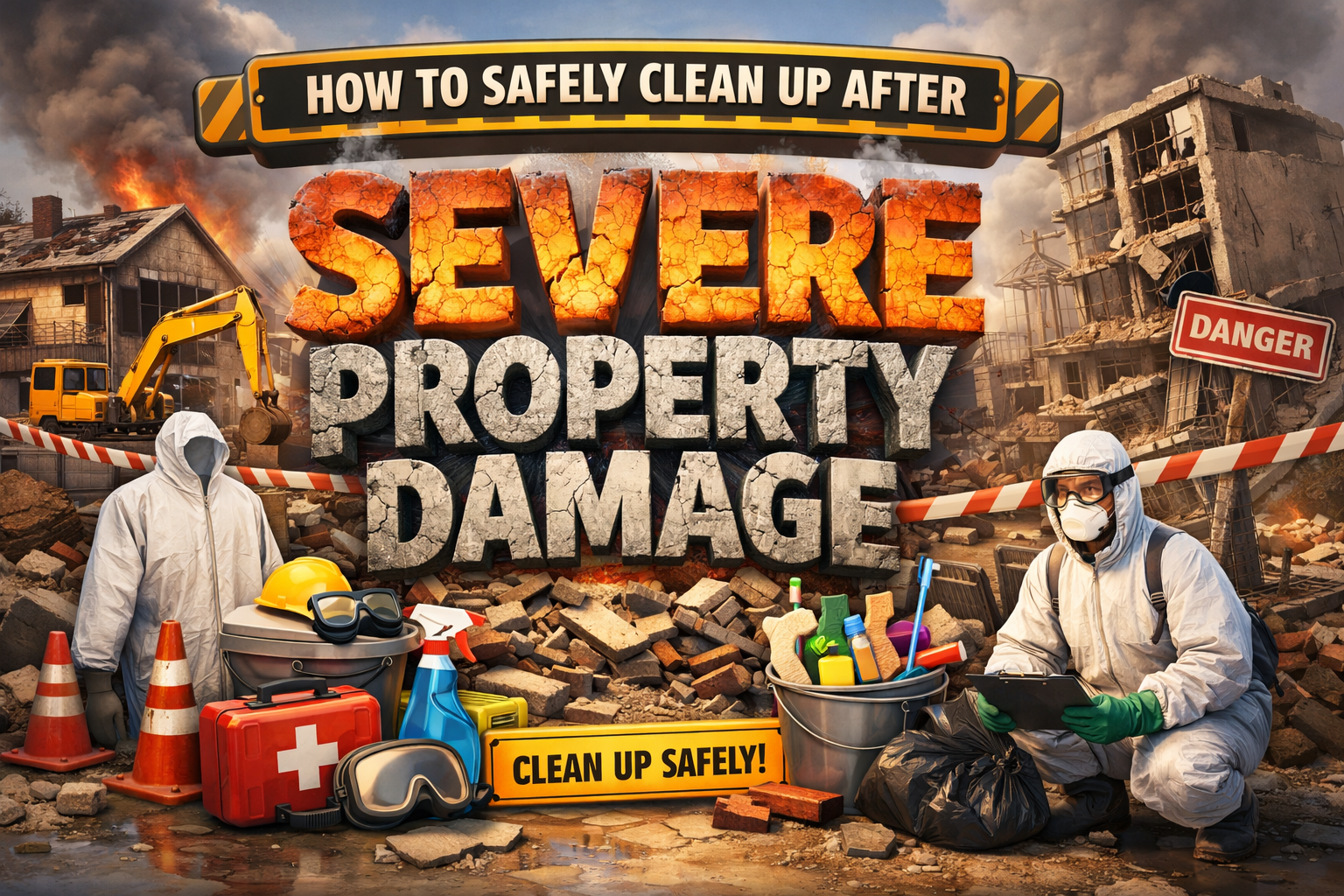
After severe property damage from storms, fires, or floods, it’s tempting to start cleaning immediately. However, rushing can be unsafe due to hidden hazards. Before beginning any cleanup, it’s crucial to have a safety-first plan to avoid putting your health at risk.
Assessing Property Safety and Structural Integrity
Your very first priority is confirming that the building is actually safe to enter. Severe events can compromise the structural framework of a building, turning a simple cleanup task into a life-threatening situation.
Start from the outside. Walk around the perimeter of the property and look for obvious signs of severe damage. Check the roof for sagging sections, missing shingles, or collapsed areas. Inspect the foundation and exterior walls for new, large cracks or bowing. If you see any of these warning signs, do not go inside.
Once you determine the exterior looks stable, proceed indoors with extreme caution. Pay close attention to the ceiling and floors. Sagging ceilings indicate trapped water or weakened joists, which could collapse at any moment. Look out for exposed electrical wires and smell for gas leaks. If you detect the odor of gas or hear a hissing sound, leave the property immediately and contact your utility provider. Always keep the power turned off at the main breaker until a qualified electrician can inspect the system.
Gearing Up: Essential Personal Protective Equipment
You should never attempt disaster cleanup in regular street clothes. The environment is likely contaminated with hazardous materials, sharp objects, and harmful bacteria. Wearing the proper Personal Protective Equipment (PPE) is non-negotiable for hazard mitigation.
At a minimum, you need a high-quality respirator mask. An N95 or P100 mask will protect your lungs from inhaling airborne mold spores, fine soot, and other dangerous particulates. Standard surgical masks will not provide adequate protection in these environments.
Next, protect your hands and eyes. Heavy-duty work gloves will shield your skin from sharp debris, exposed nails, and contaminated water. Wear safety goggles with side shields to prevent dust, chemicals, and dirty water from splashing into your eyes.
Finally, choose the right footwear and clothing. Thick, rubber boots with steel toes offer the best protection against standing water and unseen hazards on the floor. Wear long sleeves and tough pants to minimize exposed skin. If you are dealing with heavily contaminated floodwater, consider wearing a disposable protective suit over your clothing.
PPE
Cleanup Protocols for Specific Types of Damage
Different types of disasters require entirely different cleaning approaches. Treating fire damage the same way you treat flood damage will only make the situation worse.
Tackling Water Damage
Water damage requires swift action to prevent further structural degradation and fungal growth. Your first task is to remove any standing water using wet vacuums or submersible pumps. Open all windows and doors to promote airflow, and bring in heavy-duty fans and dehumidifiers to start the drying process.
Remove all soaked porous materials, such as carpets, rug pads, and drywall. These items trap moisture and are incredibly difficult to sanitize properly. If the flooding is extensive, you might need to look into water damage repair services in Salt Lake City or your local area to handle the heavy lifting. Wash all hard surfaces with a strong detergent and hot water, followed by a thorough disinfection process.
Handling Fire and Smoke Residue
Fire damage leaves behind stubborn soot and lingering smoke odors. Start by opening windows to ventilate the space and clear out residual airborne particulates. Avoid wiping soot off walls with standard wet sponges, as this will only smear the oily residue deeper into the paint and drywall.
Instead, use a dry chemical sponge to lift soot from surfaces gently. Work from the ceiling down to the floor to avoid tracking dirt over areas you have already cleaned. For smoke odors, standard air fresheners will only mask the smell temporarily. You will likely need an ozone generator or specialized air scrubbers to neutralize the odor particles completely.
Read: Emergency Response Planning for Hazardous Material
Managing Mold Safely
Mold can begin growing within 24 to 48 hours of a water intrusion event. If you discover small patches of mold (covering an area less than ten square feet), you can usually handle the cleanup yourself. Isolate the affected area by sealing doors and vents to prevent spores from spreading to the rest of the building.
Scrub hard surfaces with a commercial mold remover or a mixture of water and detergent. Do not mix bleach with ammonia, as this creates a toxic gas. Once the visible mold is gone, dry the area completely. Porous materials heavily infested with mold, such as ceiling tiles or insulation, must be bagged securely and thrown away.
Knowing When to Call the Professionals
While doing the work yourself can save money, some situations are simply too dangerous or complex for the average property owner. Knowing when to transition from a DIY cleanup to professional restoration services is crucial for your health and the longevity of your property.
Call a professional team if the structural integrity of the building is in question. Damaged load-bearing walls, sagging roofs, and compromised foundations require expert engineering and construction knowledge to repair safely.
You should also hand the job over to experts if you encounter severe health hazards. This includes raw sewage backups, widespread black mold infestations, or the presence of asbestos and lead paint. Professional restoration crews possess the industrial-grade equipment, specialized training, and protective gear necessary to mitigate these extreme hazards safely and effectively.
Moving Forward with Property Restoration
Recovering from property damage is a marathon, not a sprint. By prioritizing safety, using the correct protective gear, and understanding the specific protocols for different types of damage, you can take control of the initial cleanup phase. Always remember to document the damage thoroughly with photos and videos for your insurance claims before you start moving debris. If you ever feel unsafe or overwhelmed by the scale of the destruction, step back and contact a certified restoration professional.
Conclusion
Now that you have a better understanding of the initial cleanup phase after a natural disaster, it is important to remember that safety should always be your top priority. By following the correct protocols and using protective gear, you can minimize risks and effectively clean up the damage caused by the disaster.
Read: Basement Flood Is Challenging to Deal With – Here’s What You Must Do!