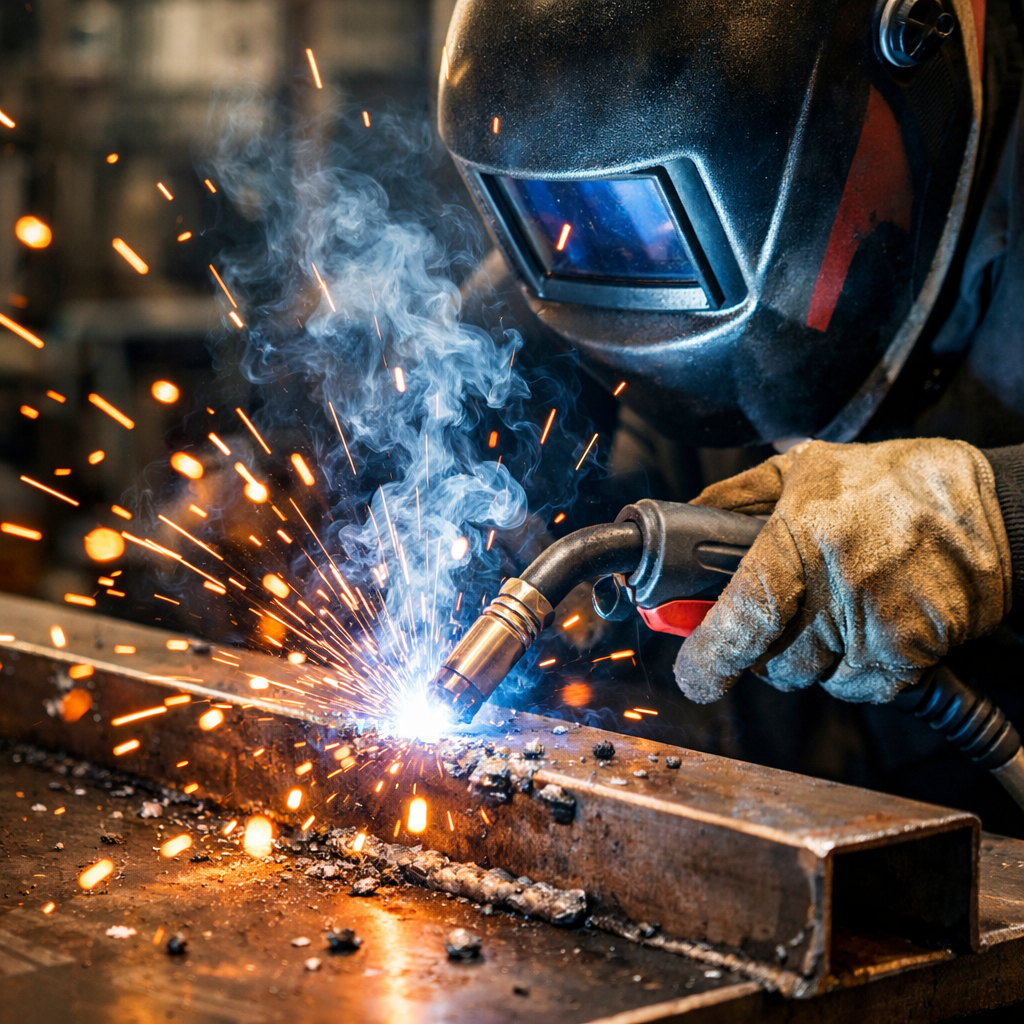
MIG welding is a popular, efficient, and relatively easy-to-learn process, but even experienced welders encounter problems. Knowing how to quickly troubleshoot issues like a sputtering arc or a sloppy weld bead is essential for maintaining high-quality results and avoiding structural failures and costly downtime.
Resolving Wire Feed Issues and Bird-Nesting
A smooth wire feed is the backbone of a good MIG weld. If the wire stutters or stops moving entirely, your arc will fail. One of the most frustrating feed issues is bird-nesting. This happens when the welding wire tangles into a massive knot at the drive rolls, halting your progress immediately.
Bird-nesting usually occurs because there is too much resistance in the wire’s path. Start by checking your drive roll tension. If the tension is set too high, the rollers will crush the wire and cause it to bend out of shape. If the tension is too low, the rollers will slip. You want just enough tension to feed the wire steadily without slipping.
Next, inspect your gun liner. A dirty or worn-out liner creates friction, forcing the wire to back up at the drive rolls. Replacing the liner regularly prevents this buildup. Finally, make sure you are using the correct size contact tip for your wire diameter. A tip that is too small will cause the wire to bind, leading straight to a bird-nest.
Identifying and Preventing Weld Porosity
Porosity looks like small sponge-like holes inside or on the surface of your weld bead. These cavities severely weaken the joint. Porosity happens when nitrogen, oxygen, or hydrogen gets trapped in the molten weld pool.
The primary cause of porosity is poor shielding gas coverage. Check your gas cylinder to ensure it is not empty. Next, verify your flow rate. A flow rate between 15 and 25 cubic feet per hour (CFH) works well for most indoor applications. If you are working outside or near a fan, breezes can easily blow your shielding gas away. Use welding screens to block drafts and protect your work area.
Contamination on the base metal is another major culprit. Oil, rust, paint, and dirt will rapidly create gas bubbles as they burn up in the arc. Always take the time to clean your metal thoroughly with a wire brush or grinder before striking an arc.
Read:What You Need to Know About Welding Apparel
Fixing Burn-Back and Contact Tip Problems
Burn-back happens when the welding wire melts backward and fuses solidly to the contact tip. This abruptly stops the arc and forces you to stop working to replace the ruined tip.
Holding the welding gun too close to the workpiece often causes burn-back. Maintaining a proper contact-tip-to-work distance, usually about three-eighths to half an inch, keeps the wire melting at the right pace.
Another common cause is a slow wire feed speed relative to your voltage. If the wire feeds too slowly, the high heat melts it faster than the machine can push it out. Check your machine settings and increase the wire feed speed slightly. Additionally, inspect your ground clamp. A poor work connection creates erratic voltage drops, which can cause the wire to burn back unpredictably.
Adjusting Voltage and Wire Speed to Stop Spatter
A little bit of spatter is normal, but excessive spatter makes your workpiece look terrible. It also forces you to waste valuable time chipping and grinding away the tiny metal balls stuck to your project.
Excessive spatter usually points to an imbalance between your voltage and your wire feed speed. If your voltage is too low or your wire speed is too high, the wire will stubbornly plunge into the weld pool instead of melting smoothly. This violent reaction throws molten metal everywhere. Try turning up your voltage or dialing back your wire feed speed until the arc produces a smooth, consistent buzzing sound.
Your choice of gas also impacts spatter levels. A mix of 75% Argon and 25% CO2 produces a much smoother arc than 100% CO2. When you are doing standard steel welding, selecting the right gas mixture goes a long way toward keeping your work area clean. Finally, double-check your polarity. Standard solid wire requires Direct Current Electrode Positive (DCEP). Running the wrong polarity guarantees a messy, spatter-filled weld.
Best Practices for Routine Machine Maintenance
Taking care of your welding equipment prevents the majority of these common issues. A well-maintained machine feeds wire smoothly, provides consistent voltage, and delivers proper gas flow.
Make it a habit to clean your welding gun nozzle frequently. Spatter builds up inside the nozzle and eventually blocks the flow of shielding gas, leading directly to porosity. Keep a pair of welpers handy to scrape out the nozzle throughout the day. You should also replace your contact tips regularly. As wire feeds through the tip, it slowly wears out the copper hole. An oversized hole causes erratic electrical transfer and an unstable arc.
Every few months, open up your machine and use compressed air to gently blow out the accumulated metallic dust. Dust buildup on the internal circuit boards can cause the machine to overheat or short out entirely.
Conclusion
Troubleshooting MIG welding issues comes down to observation and process of elimination. When you encounter a problem, pause and evaluate your setup. Check your gas flow, inspect your consumables, and verify your machine settings.
Read: A free detailed guide for Welding and metal fabrication Safety